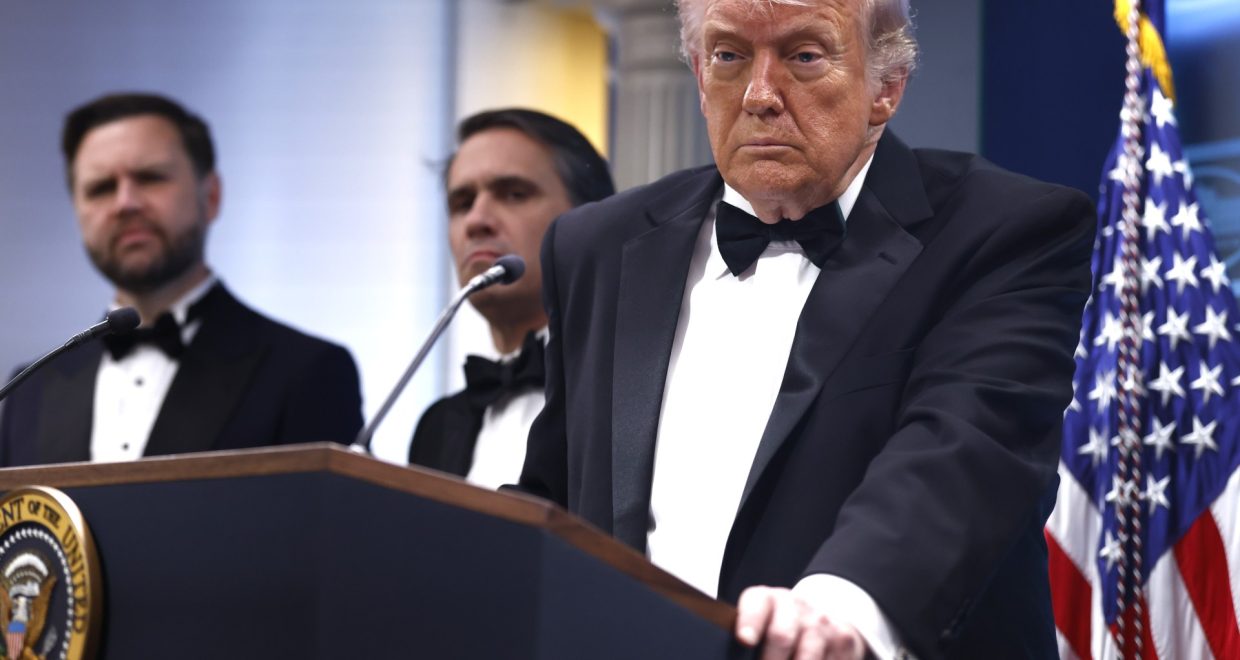
President Donald Trump and his national security team have expressed skepticism regarding Iran’s proposal to reopen the Strait of Hormuz and defer discussions on its nuclear program. This development was reported by The Wall Street Journal and Reuters, highlighting concerns over the postponement of nuclear negotiations [1][2].
On Monday, April 27, 2026, Trump met with his national security advisers to review the Iranian proposal. During the meeting, he expressed dissatisfaction with the plan, which suggests reopening the crucial waterway but delays talks on Iran’s nuclear activities until after the ongoing conflict ends [2][3].
The Strait of Hormuz is a vital passage for global oil shipments, and its reopening is seen as significant for international trade. However, the deferment of nuclear discussions has raised concerns among U.S. officials about Iran’s intentions and the potential impact on regional stability [1][3].

While the proposal includes reopening the strait, it postpones negotiations on Iran’s nuclear program, a point of contention for the U.S. administration. The Wall Street Journal reported that Trump and his advisers are wary of Iran’s motives, though this characterization lacks independent corroboration from other sources [1].
What Is Known
President Trump and his national security team reviewed Iran’s proposal on April 27, 2026. The proposal includes reopening the Strait of Hormuz but delays nuclear talks until after the conflict ends. Trump expressed dissatisfaction with the postponement of these discussions [2][3].
What Remains Unclear
It remains unclear whether Iran is negotiating in good faith or if it will abandon uranium enrichment and nuclear weapons development. This aspect of the situation is reported by The Wall Street Journal but lacks confirmation from other independent sources [1].
This article was generated by Bluxle's AI system based on research from multiple news sources. All facts are sourced and cited below. The AI is designed to be neutral and fact-based with no editorial opinion.

Sources & Citations
Weighted by citation frequency — sources cited more often carry greater influence.
Research Basis
Outlets in bold were actively consulted during research for this article. Others are in our standard monitoring pool.
Report an Issue
Tell us what you noticed. Our editors will review it.
✓ Report received. Thank you!