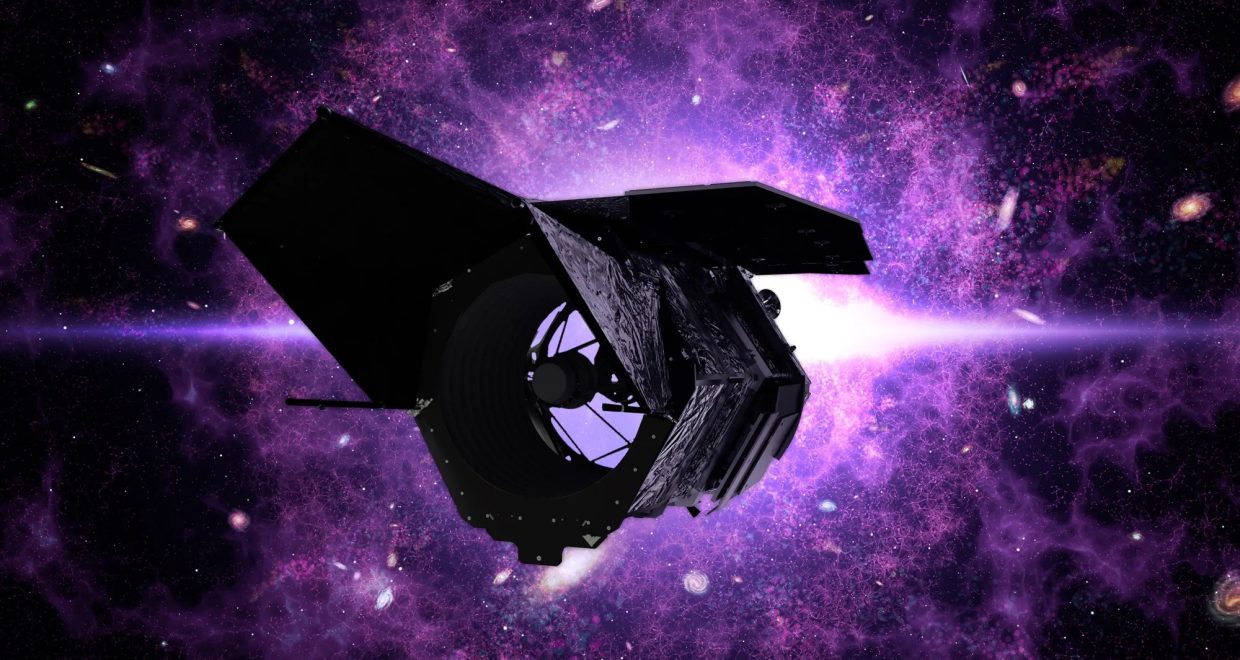
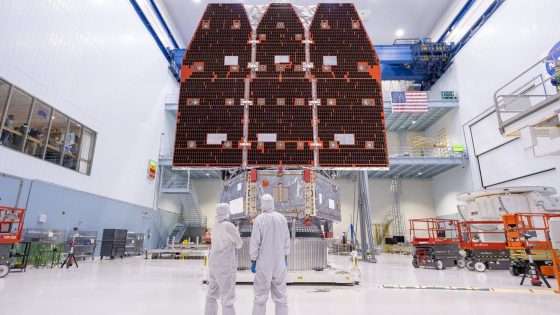
NASA unveiled the fully assembled Nancy Grace Roman Space Telescope during a news conference on April 21, 2026, at NASA’s Goddard Space Flight Center in Greenbelt, Maryland [1]. The telescope, named after NASA’s first Chief of Astronomy, is on track for a launch as early as fall 2026, with a projected launch window in September 2026 [2].
The Roman Space Telescope will be launched aboard a SpaceX Falcon Heavy rocket from NASA’s Kennedy Space Center in Florida [2]. Once operational, it will orbit the Sun-Earth Lagrange Point 2 (L2), approximately one million miles from Earth [3].
The telescope features a primary mirror approximately 2.4 meters in diameter, similar in size to the Hubble Space Telescope’s mirror, but with a field of view at least 100 times larger and a surveying capability over 1,000 times faster [2]. It carries two instruments: the Wide Field Instrument, a 288-megapixel camera, and a Coronagraph Instrument technology demonstration [4].
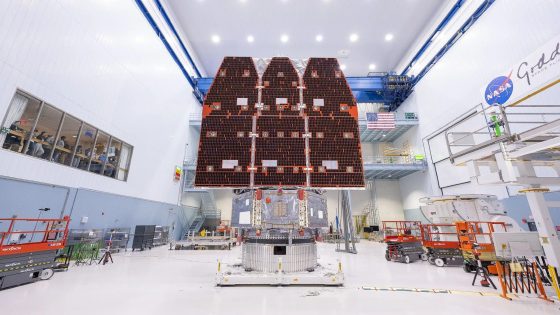
During its five-year primary mission, the Roman Space Telescope is expected to discover more than 100,000 exoplanets, map billions of galaxies, and probe dark energy and dark matter [4]. The mission is managed by NASA’s Goddard Space Flight Center, with participation from NASA’s Jet Propulsion Laboratory, Caltech/IPAC, and the Space Telescope Science Institute, among others [4].
What Is Known
The telescope has completed construction and prelaunch testing, and its launch is scheduled for fall 2026 [2]. It will operate from the L2 point, providing a stable environment for its observations [3]. The mission aims to significantly advance the understanding of exoplanets and cosmic phenomena [4].
What Remains Unclear
While the telescope is on track for a fall 2026 launch, specific dates have not been confirmed beyond the projected window [2]. Additionally, claims regarding the mission being ahead of schedule and under budget have not been corroborated by multiple sources [2].
This article was generated by Bluxle's AI system based on research from multiple news sources. All facts are sourced and cited below. The AI is designed to be neutral and fact-based with no editorial opinion.

Sources & Citations
Weighted by citation frequency — sources cited more often carry greater influence.
Research Basis
Outlets in bold were actively consulted during research for this article. Others are in our standard monitoring pool.
Report an Issue
Tell us what you noticed. Our editors will review it.
✓ Report received. Thank you!